
Law Enforcement – De-Escalation Training
De-Escalation Training For Law Enforcement - NZ
Last Updated September 2026
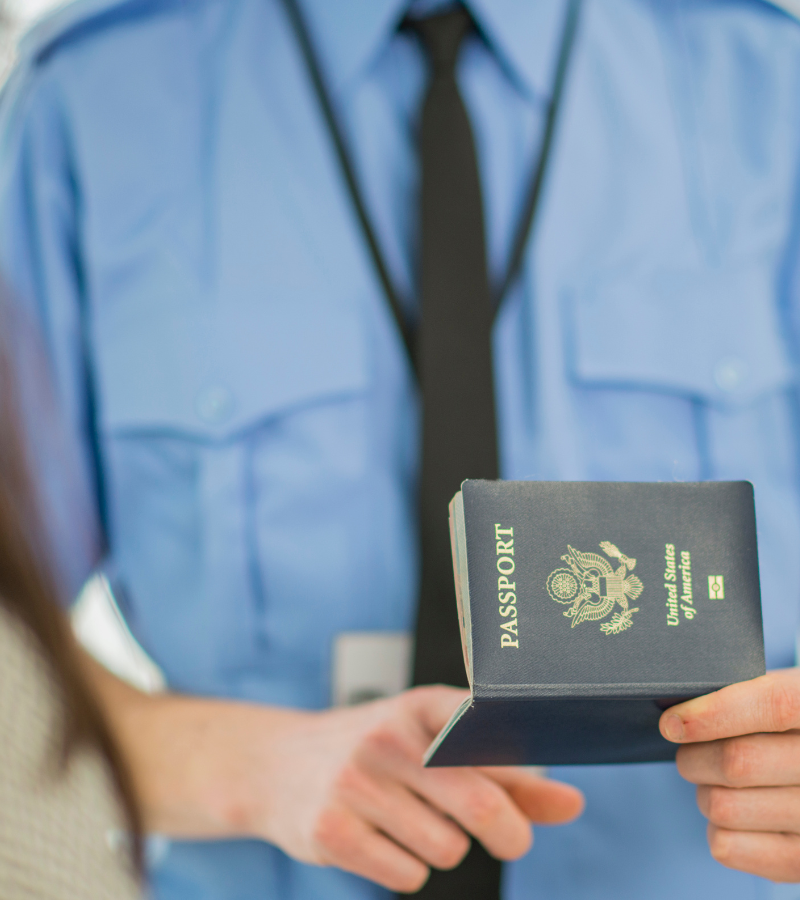
Law enforcement covers a wide range of roles beyond police officers — including customs and border protection, immigration enforcement, transit officers, parole and probation officers, fisheries and wildlife enforcement, and compliance and enforcement officers. Each of these roles carries legal authority to enforce laws or regulations, and each regularly involves contact with people who are frustrated, non-compliant, or aggressive.
This page covers de-escalation training for the broader law enforcement sector. For Police and Corrections, see our Police page, or Corrections page.
Officers across these roles are often the ones enforcing rules that people don’t want enforced — a customs officer inspecting luggage, a transit officer checking a fare, a compliance officer issuing a notice, a parole officer conducting a check-in— and these interactions can escalate quickly, with rising tension creating mistrust that tips a routine encounter into a crisis. Many officers are trained to handle difficult situations, but do your officers know how to handle conflict without the use of force?
Building this skill gives officers the stability and confidence to carry out their duties safely in harsh or unpredictable circumstances.
Why De-Escalation Matters Across Law Enforcement Roles
Resolution Education is a New Zealand specialist OVA provider, and our Law Enforcement training is built around the A.D.P. Framework, customised to the legal powers and operating environment of your specific agency.
Whether it’s a customs officer managing a frustrated traveller, a transit officer dealing with a non-compliant passenger, or a compliance officer facing pushback during an inspection, the ability to de-escalate a tense interaction before it turns confrontational is a core skill — not an optional extra.
We understand law enforcement are responsible for enforcing the law, preventing chaos and casualties, and also apprehending criminals, they might be met with scenarios where tension levels rise enough to create mistrust amongst the people involved leading to situations of crisis. Learning essential skills in de-escalation through Resolution Education will benefit both the law enforcement officer and society.
By implementing simple strategies law enforcement agencies can significantly improve their interactions with difficult individuals. We equip officers with the necessary skills to confidently manage and control situations ranging from stressful conversations to dangerous encounters.
In recent times, the methods used by law enforcement have come under scrutiny for not being the safest possible actions they could have taken, and critics have stressed upon the need for extensive training in de-escalation in the departments of law enforcement. By applying the strategies of de-escalation that Resolution Education teaches, officers, can slow the situation down and handle it in a way that will have the least harmful outcome.
How Communication Can Help Reduce Conflict For Law Enforcement
The main objective of law enforcement de-escalation at Resolution Education is to reduce the tension and aggravation in a particular situation and achieve a state where a positive verbal dialogue becomes a possibility. The clarity in communication is necessary for these situations since ineffective and inadequate communication skills can result in the situation getting further distressed.
These techniques are a comprehensive set of guidelines to follow, which ensure that law enforcement officers interactions with the public have as little conflict as possible and have dominantly positive outcomes.
Our training in communication will help you:
- Identify the right choice of words to use (and the wording to avoid) when faced with aggressive or distressed individuals.
- Learning how to regain control of the situation by listening sympathetically.
- Learn to pick up non-verbal cues based on body language and using it to make the subject feel safe and give them a sense of security.
- Understand the positive and negative impacts your body language can have on the situation.
- Recognising actions and words that might be perceived as threatening and which can needlessly aggravate the situation.
The Outcomes Of De-Escalation Training For Law Enforcement
The main goal to achieve by employing de-escalation strategies is to disrupt intense confrontations. This helps de-escalate the situation in a way that verbal dialogue becomes a practical option.
Resolutions Education’s de-escalation strategies will teach you how first to assess and then manage every situation and its possible outcomes. Once you are fluent in the techniques of de-escalation, you will be able to recognise changes in the behaviour of the distressed individual, such as a sudden change in body language or tone, and foresee possible threats before they occur.
When applied correctly, these strategies will help you
- Prevent potentially violent incidents from escalating to the point where physical force becomes necessary.
- Become more comfortable in your ability to tackle challenging scenarios without resorting to the use of force.
- Become efficient in finding the first warning signs of conflict
- Gain confidence in intervening and de-escalating the situation before it gets aggravated
- Use their increased emotional intelligence to help them regulate their first impulses and stay in control of their instincts, even during violent conflicts.

Why You Should Choose Resolution Education
Traditional law enforcement training does not equip officers with these mental tools resulting in a fight response from them, which leads to flawed decisions made in the heat of the moment.
Resolution Education programs focus on in-depth training in removing barriers of communication and tactical disengagement through theoretical and interactive modules that will provide you with a comprehensive set of skills to diffuse threatening situations effectively.
Our wide array of programs like De-escalation and Occupational Violence and Aggression (OVA) training include physical and non-physical training sessions and are fully customisable for every organization. Contact us today at 0800 895 201 to find out more about our law enforcement de-escalation programs.

Customise Your Training Now
To enrol or find out more information please call 0800 895 201 or click the button below.
Our Training & Services
Contact Us
Ground Floor, 26A Hobson Street,
Auckland Central, Auckland 1010